

THE CLOTHES WERE NEVER THE STAR
LET’S BE HONEST
Let’s be honest.
There are a lot of boutiques.
A lot of websites.
A lot of new arrivals.
A lot of sales.
A lot of stores carrying pieces that, somewhere else, someone else is probably selling too.
The world didn’t need another boutique.
What made OTB different wasn’t the inventory.
It was Quintan Johnson.
Her eye.
Her confidence.
The way she could look at a piece and immediately understand what it needed.
What to pair it with.
Where to wear it.
How to make it feel like you instead of something you simply bought.
And more importantly, her ability to help women see themselves differently the moment they put something on.
That was the real value.
The challenge wasn’t finding better clothes.
The challenge was building an experience that finally made Quintan’s value visible everywhere the customer interacted with the brand.
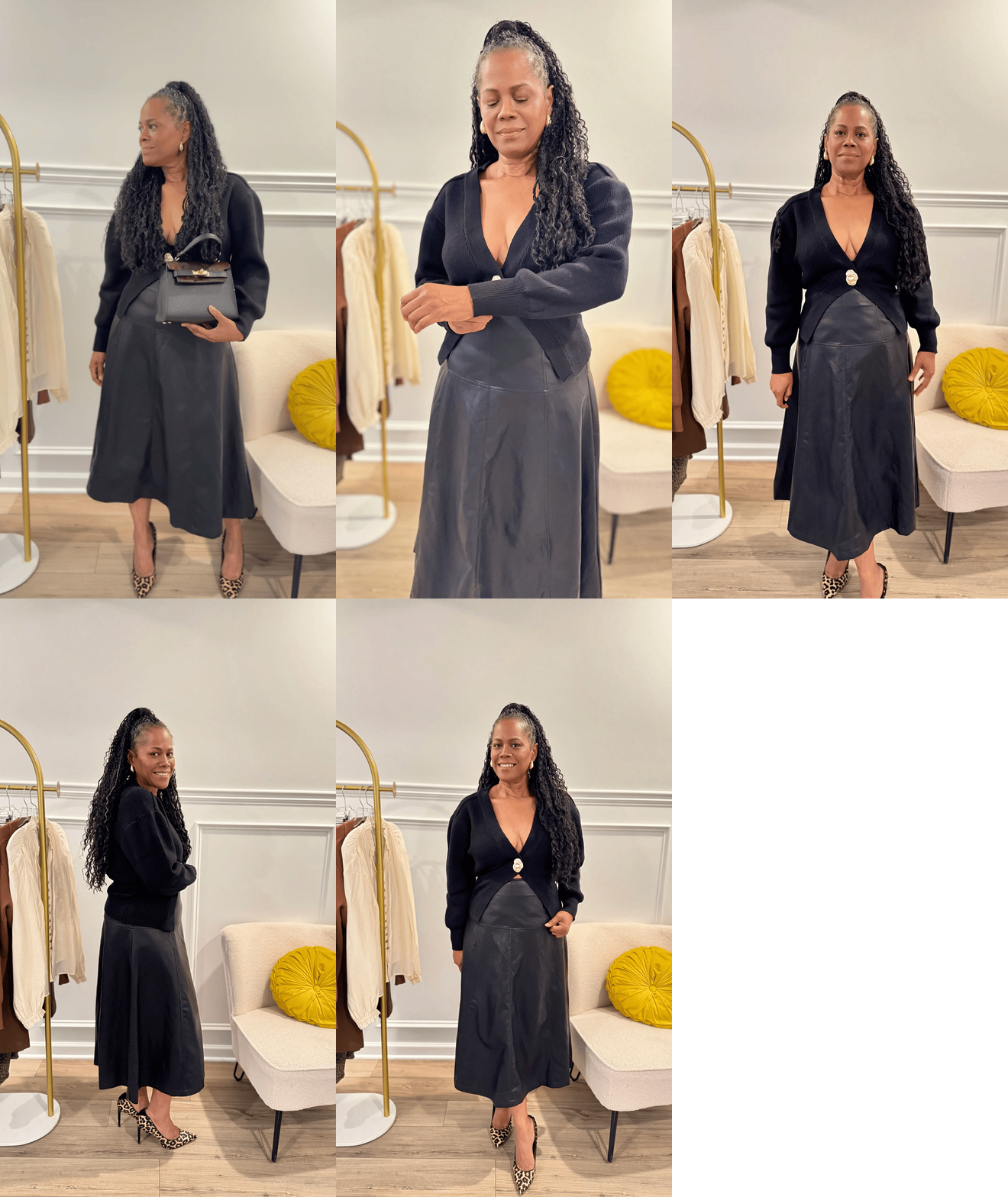
WHAT WE SAW
The business already had customers.
The business already had community.
The business already had personality.
The business already had trust.
What it didn’t have was a system that consistently communicated why those customers kept coming back.
The website was selling products.
The emails were selling products.
The content was selling products.
But the customers weren’t coming back because of the products alone.
They were coming back because of Q.
Because they trusted her taste.
Because she could tell them:
Wear this.
Put this with it.
Take this on vacation.
Wear this to dinner.
This one is for you.
That relationship was happening naturally.
The brand just wasn’t fully building around it yet.
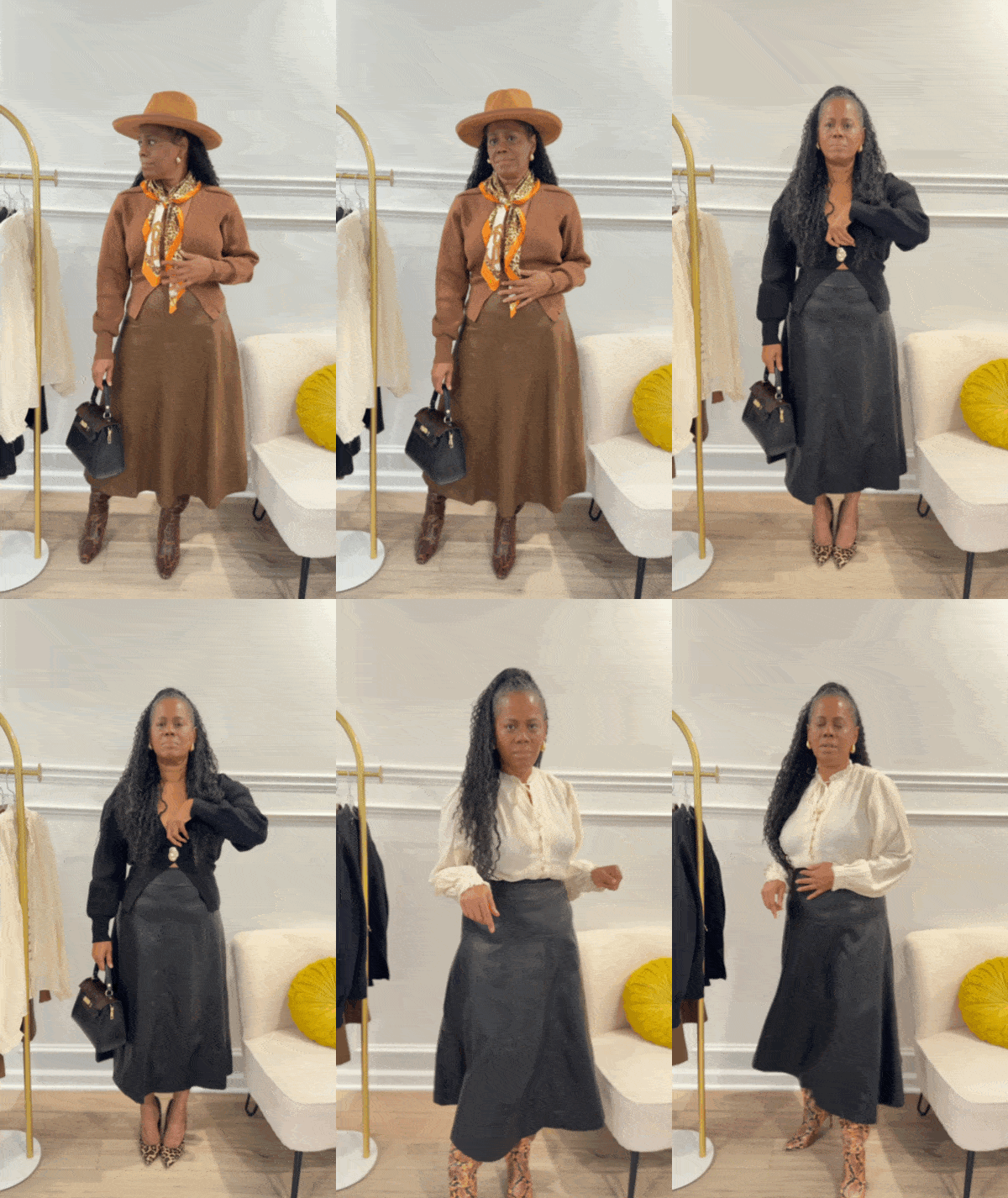
The Question that changed the project
Before we touched another homepage section or planned another campaign, we needed to answer one question:
What business are we really in?
A boutique?
Or a styling experience?
That distinction changed everything.
Because boutiques sell inventory.
Stylists build confidence.
Boutiques focus on products.
Stylists focus on people.
A boutique says:
Here’s what’s new.
A stylist says:
Here’s what I see for you.
Once we understood that difference, the direction became much clearer.
Quintan didn’t need to sit behind the brand.
She needed to become part of the value proposition.
WHAT WE DECIDED
We made a few decisions early that shaped the rest of the experience.
Decision One: The clothes would support the story, not become the entire story.
Products would always matter.
You cannot run a fashion business without product.
But product alone is easy to copy.
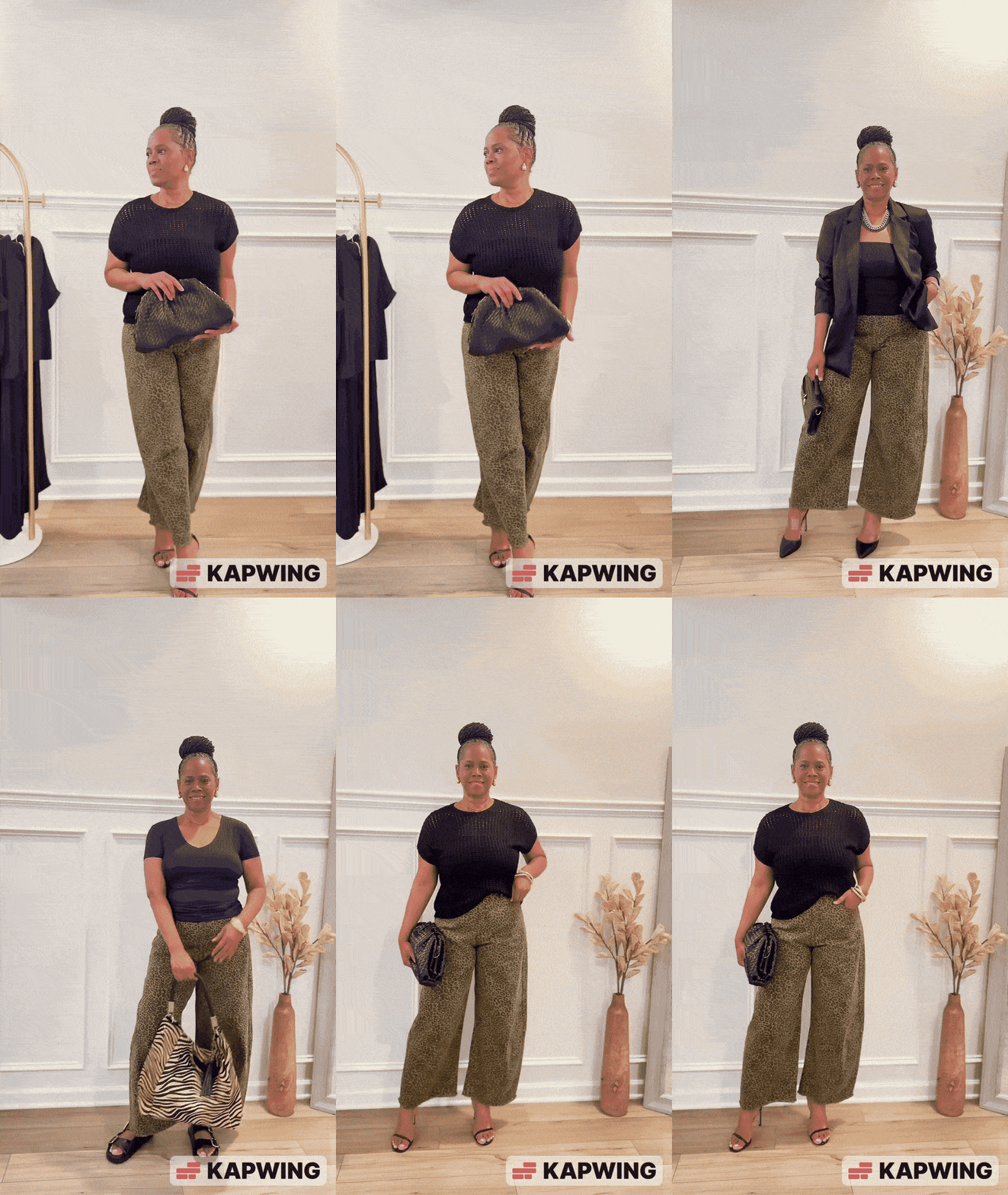
Someone else can carry another wide-leg jean.
Another jumpsuit. Another statement top.
What they cannot copy is Quintan’s perspective.
So the brand needed to stop depending solely on what was available and begin building around how Q saw it.
Decision Two: Customers needed context, not just product photos.
A lot of women don’t need more options.
They need help seeing the possibility.
Where would I wear this?
What would I put with it?
Does this work for my style?
Could I actually pull this off?
Instead of simply showing clothing, the experience needed to help customers imagine themselves wearing it.
Because sometimes the gap between browsing and buying is not interest.
It’s confidence.
Decision Three: Quintan’s voice needed to travel with the customer.
The customer shouldn’t only experience Q when speaking with her directly.
Her perspective needed to show up in:
The website. The email. The content. The product storytelling.
The collections. The campaigns. The recommendations.
If someone discovered OTB at midnight with no one there to personally style them, they should still feel like Q was somewhere in the experience saying:
Girl, put this with that.
That became the standard.
THE SHIFT
We moved away from simply showing products and started building context around them.
Instead of:
Here’s what’s new.
The conversation became:
Here’s how I’d wear it.
Instead of:
Buy this dress.
It became:
Here’s where you’d wear it, how I’d style it, and why I think you’re going to love it.
Instead of relying solely on categories, products could live inside stories.
Moments.
Looks.
Occasions.
Personal recommendations.
The goal wasn’t to push more inventory.
The goal was to help customers see more possibilities.
Because confidence sells better than inventory ever will.
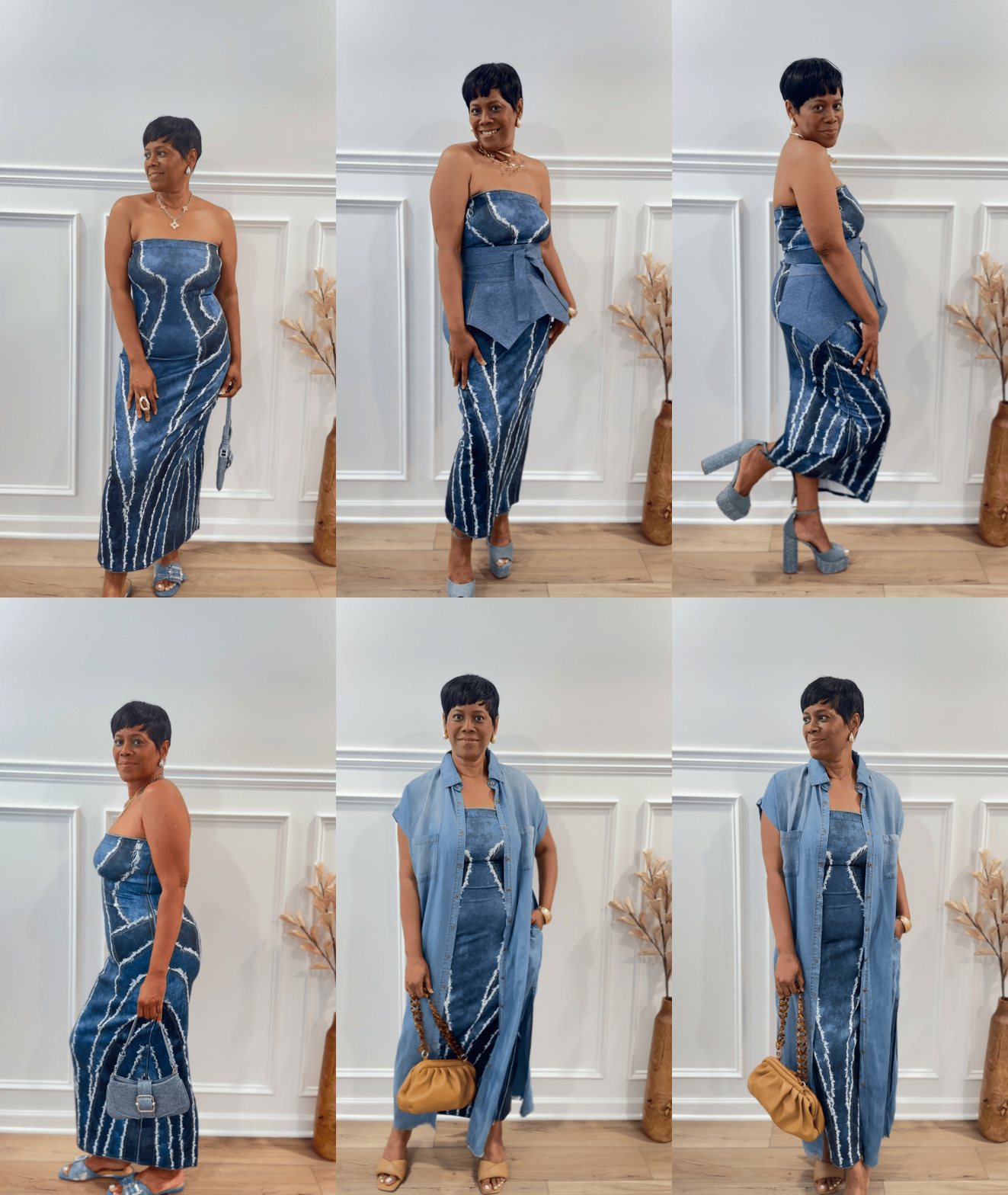
WHAT WE BUILT
This wasn’t simply a redesign.
It wasn’t a collection launch.
It was an experience-elevation project.
The goal was to translate the feeling of shopping with Miss Q into a digital experience that could work even when she wasn’t personally standing beside the customer.
Editorial Shopping Experience
We created a shopping journey built around discovery, styling, personality, and inspiration rather than treating the website like a product database.
Website Experience
The site was restructured to make shopping easier while giving the brand more room to express its personality and perspective.
Personal Stylist Positioning
Quintan’s expertise became more visible throughout the brand so customers could understand that they weren’t simply buying from a boutique.
They had a stylist behind it.
Email Marketing
Campaigns were designed to feel more like recommendations from someone who knows your style than promotions from a retailer.
SMS Marketing
SMS created lighter, more immediate moments of connection that could support launches, restocks, promotions, and customer return.
Content Systems
Repeatable content formats made it easier to communicate consistently without reinventing the brand every time something needed to be posted or promoted.
Campaign Planning
We built campaign structures around launches, seasonal stories, promotions, products, and customer retention rather than relying on isolated announcements.
BEHIND THE BUILD
One of the biggest realizations during this project was that customers weren’t simply shopping for clothes.
They were shopping for confidence.
Guidance.
Reassurance.
Possibility.
They wanted someone to help them put the pieces together.
And that changed how we approached everything.
The website.
The emails.
The product storytelling.
The campaigns.
The collections.
Because once we stopped treating OTB like a boutique and started treating it like a styling experience, the brand had a much clearer reason to exist.
-
WEBSITE EXPERIENCE
The website needed to be easy to shop without feeling like another boutique.
Clear product navigation stayed intact, while styling, curation, and founder personality created a stronger reason to explore.
-
PRODUCT SPOTLIGHT
Product Spotlights gave individual pieces context.
Instead of only showing what the item was, the content helped customers understand how it moved, styled, and fit into real life.
-
STYLE NOTES
Style Notes turned Q’s perspective into a repeatable shopping tool.
Instead of simply presenting a product, the brand could show customers how she would wear it, where it belonged, and why it was worth considering.
-
COLLECTION FEATURES
Collections were presented as curated experiences rather than groups of products. The goal was to create a stronger emotional connection while helping customers discover pieces that worked together.
-
EDITORIAL CONTENT
OTB needed more to talk about than new arrivals and sales.
Lookbooks, style stories, customer features, and styling content created more ways to build connection between purchases.
-
EMAIL MARKETING
The emails were written to sound like Q, not a retailer.
Every campaign aimed to feel like a recommendation from a stylist who already understood her customer.
-
STATEMENT PIECES
Not every product needed equal attention.
Statement Pieces gave OTB a way to highlight the items worth building a look around and guide customers toward stronger styling moments.
-
MEET QUINTAN
Q could no longer live only on an About page.
Bringing her directly into the shopping experience made her expertise part of the value proposition not something customers had to discover later.
-
SMS MARKETING
SMS gave the brand a lighter way to stay connected.
Restocks, launches, recommendations, and promotions could feel more personal and immediate without becoming overly promotional.
-
CUSTOMER CONNECTION
The refreshed experience created more ways for customers to participate in the brand.
Reviews, OTB On You, Style Stories, and the Style Quiz extended the relationship beyond browsing and checkout.
BEHIND THE BUILD
The result wasn’t simply a cleaner website.
OTB gained a clearer way to turn Quintan’s personal value into a brand experience that could scale beyond one-on-one conversations.
The business now had:
stronger personal-stylist positioning
clearer merchandising hierarchy
more context around products
repeatable editorial content opportunities
a stronger founder presence
more intentional email and SMS communication
shopping experiences built around inspiration as well as transaction
customer-engagement paths beyond the product catalog
a more recognizable brand voice
Most importantly, customers no longer had to personally interact with Quintan to understand what made OTB different.
Her perspective could meet them throughout the experience.
LOOKING BACK
OTB reminded us that sometimes the most valuable part of a business isn’t what’s being sold.
It’s who’s selling it.
The inventory mattered.
The website mattered.
The campaigns mattered.
The clothes mattered.
But the real differentiator was Miss Q.
Her eye.
Her confidence.
Her recommendations.
Her relationship with the women who trust her to help them get dressed.
Once the brand started building around that expertise instead of hiding it behind the products, everything became more connected.
The clothes didn’t become less important.
They finally had the right guide standing beside them.