

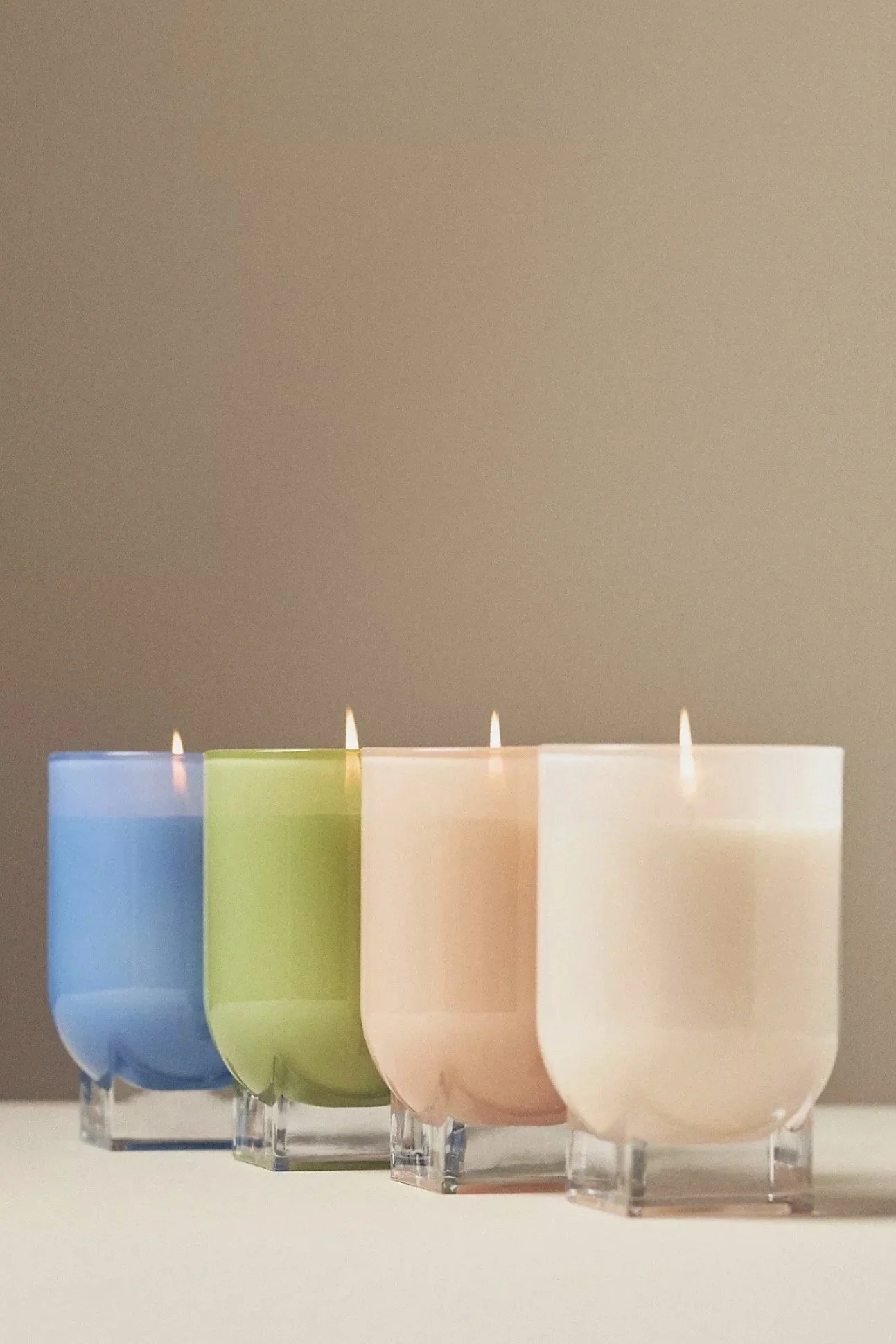
A HOUSE YOU DON’T WALK INTO. YOU LIGHT IT.
LET’S BE HONEST
There are a lot of candles.
A lot of beautiful vessels.
A lot of fragrance notes promising warmth, comfort, and relaxation.
A lot of brands telling you how their candles smell.
And honestly?
The world didn’t need another one.
What made House of Ember interesting wasn’t simply the fragrance.
Or the vessel.
Or how beautifully a candle could sit on a coffee table.
It was the idea that a scent could make a space feel entirely different.
Think about it.
Every home has rooms.
But not every room feels the same.
There’s the place where you welcome people in.
The room where conversations linger.
The corner where you finally get a moment to yourself.
The space where the day begins.
And the one where it ends.
Each room has its own energy.
Its own personality.
Its own memories.
The more we explored House of Ember, the more we realized this wasn’t really a conversation about candles.
It was a conversation about home.
And how something as simple as lighting a flame could change the way you experience it.
That’s where we started.
Not with the fragrance notes.
Not with the packaging.
Not with the product catalog.
With a house.
What we saw
The home-fragrance industry is filled with beautiful products.
Minimal packaging.
Elegant photography.
Premium ingredients.
Sophisticated scent combinations.
And plenty of candles promising to transform your space.
But when it comes time to shop, the experience often becomes surprisingly ordinary.
Choose a scent.
Read the notes.
Pick a size.
Add to cart.
There’s nothing necessarily wrong with that.
But it leaves an important question unanswered.
What am I actually trying to create in my home?
Because people don’t always light candles simply because they enjoy a particular fragrance.
Sometimes they’re preparing for guests.
Sometimes they’re settling into an evening.
Sometimes they’re trying to make a room feel warmer.
Sometimes they’re creating a little distance between the responsibilities of the day and the peace of being home.
And sometimes they just want their space to feel more like them.
House of Ember had an opportunity to build around those moments.
Instead of asking customers to begin with fragrance, we could invite them to begin with the space.
That changed everything.
what we decided
We made a few decisions early that shaped everything that followed.
Decision One: The house would become the shopping experience.
Instead of organizing the entire brand around fragrance families, we built around familiar spaces.
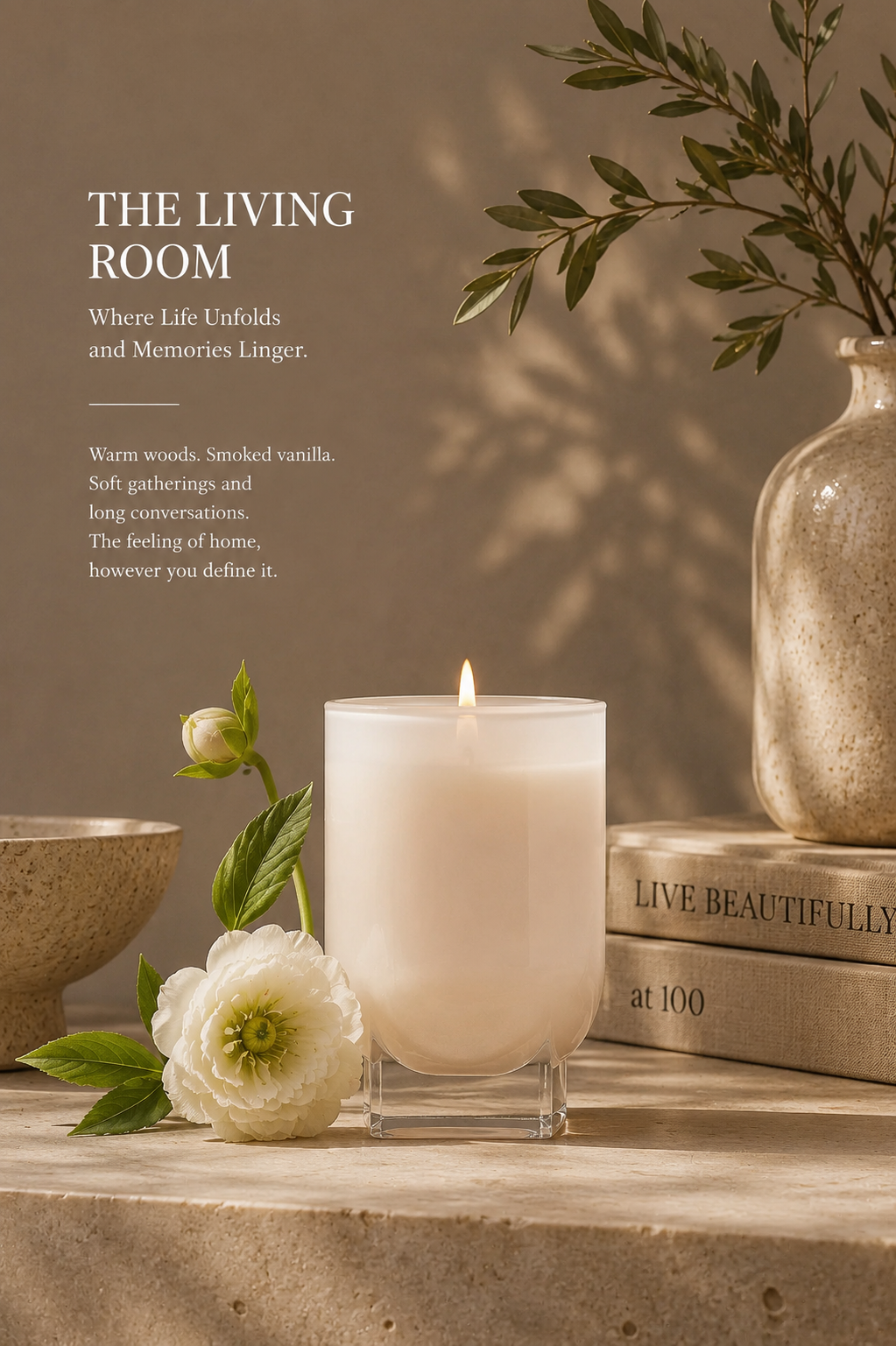
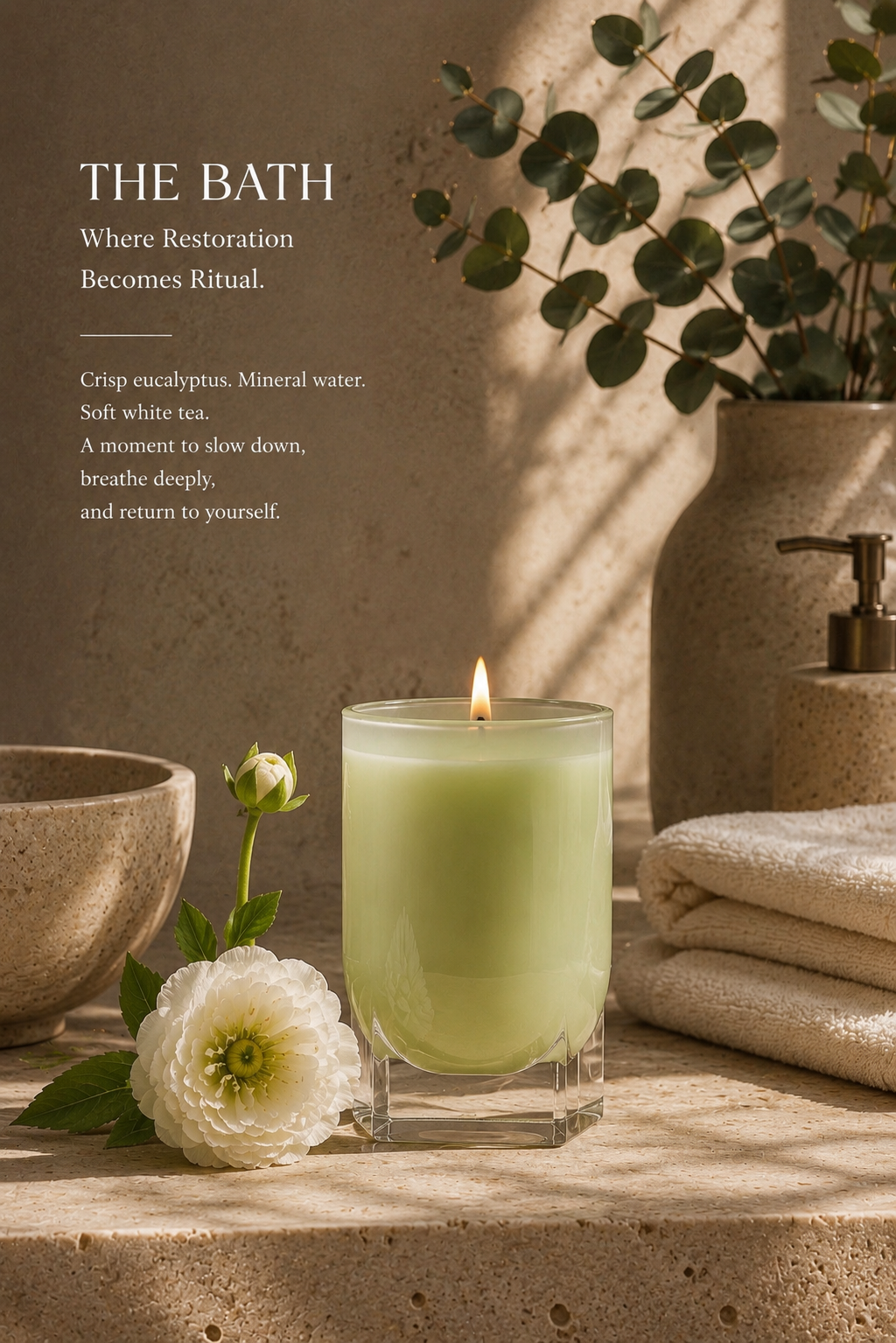
The Foyer. The Living Room. The Kitchen.
The Bedroom. The Bath. The Study.
Rooms people already understand.
Rooms that already carry meaning.
Each one could introduce a fragrance through an atmosphere instead of expecting customers to interpret scent notes without context.
Because it’s easier to imagine how you want a room to feel than to know exactly which combination of fragrance notes will create that feeling.
Decision Two: The products needed to feel like objects worth living with.
A candle doesn’t disappear when the flame goes out.
It sits on a shelf. A table. A nightstand. A vanity.
It becomes part of the room.
So the visual experience needed to acknowledge that.
The vessels couldn’t feel like ordinary containers.
They needed presence.
Shape. Color. Personality.
Something that could belong in a home even when the candle wasn’t burning.
Decision Three: Storytelling couldn’t make shopping complicated.
This mattered.
A concept can be beautiful and still become exhausting to navigate.
We didn’t want people working through an elaborate experience just to purchase a candle.
Some customers want to explore.
Others already know what they want.
Both deserve a clear path.
The house concept needed to create discovery without creating decision fatigue.
The storytelling could be immersive.
The shopping still needed to be simple.
Decision Four: The experience couldn’t end when the candle arrived.
The brand wasn’t simply selling something to burn.
It was introducing a ritual.
Lighting the candle. Settling into the space.
Caring for the vessel. Choosing the next room.
That gave House of Ember room to create a relationship beyond a single purchase.
Not through constant promotions.
Through the experience of living with the product.
the shift
We moved away from fragrance as a product category and toward fragrance as an experience of space.
From:
“Which candle smells the best?”
To:
“How do I want this room to feel?”
From choosing a product based only on notes.
To choosing an atmosphere.
From selling individual candles.
To inviting customers into a house.
The product didn’t become less important.
It gained context.
A reason to exist.
A place to belong.
And suddenly, each candle had a story before the customer ever lifted the lid.
what we built
House of Ember was developed as a connected digital brand experience where the concept of home informed everything from product discovery to visual storytelling.
Brand Positioning
A fragrance experience built around the relationship between scent, space, mood, and the rituals of everyday living.
The House Concept
A recognizable brand world where individual candles were introduced through rooms, each representing a distinct atmosphere and experience.
Visual Identity & Art Direction
An editorial direction built around sculptural vessels, expressive color, refined typography, intimate styling, and carefully composed product photography.
Website Experience
A digital storefront designed to feel like an invitation into House of Ember while maintaining clear, straightforward shopping paths.
Collection & Product Discovery
A merchandising framework that allowed customers to explore the house by room or shop directly through the product catalog.
Product Page Experience
An immersive structure combining room-led storytelling, fragrance composition, practical product details, and purchase functionality.
Living With the Flame
A ritual-focused storytelling system that helped customers imagine the candle becoming part of their everyday routines.
Accessories & Complementary Products
Supporting products that made sense within the candle-care ritual rather than feeling like unrelated additions to the catalog.
Editorial Brand Content
The House Journal and surrounding storytelling direction created opportunities to explore fragrance, atmosphere, interiors, and intentional living beyond individual product releases.
Customer Journey
A connected path from discovering the house to choosing a room, understanding the fragrance, purchasing, and exploring additional products and rituals.
BEHIND THE BUILD
The most important decision was also the simplest.
We stopped asking customers to imagine a scent they had never experienced.
And started helping them imagine a space they already understood.
Everything else grew from there.
-
![]()
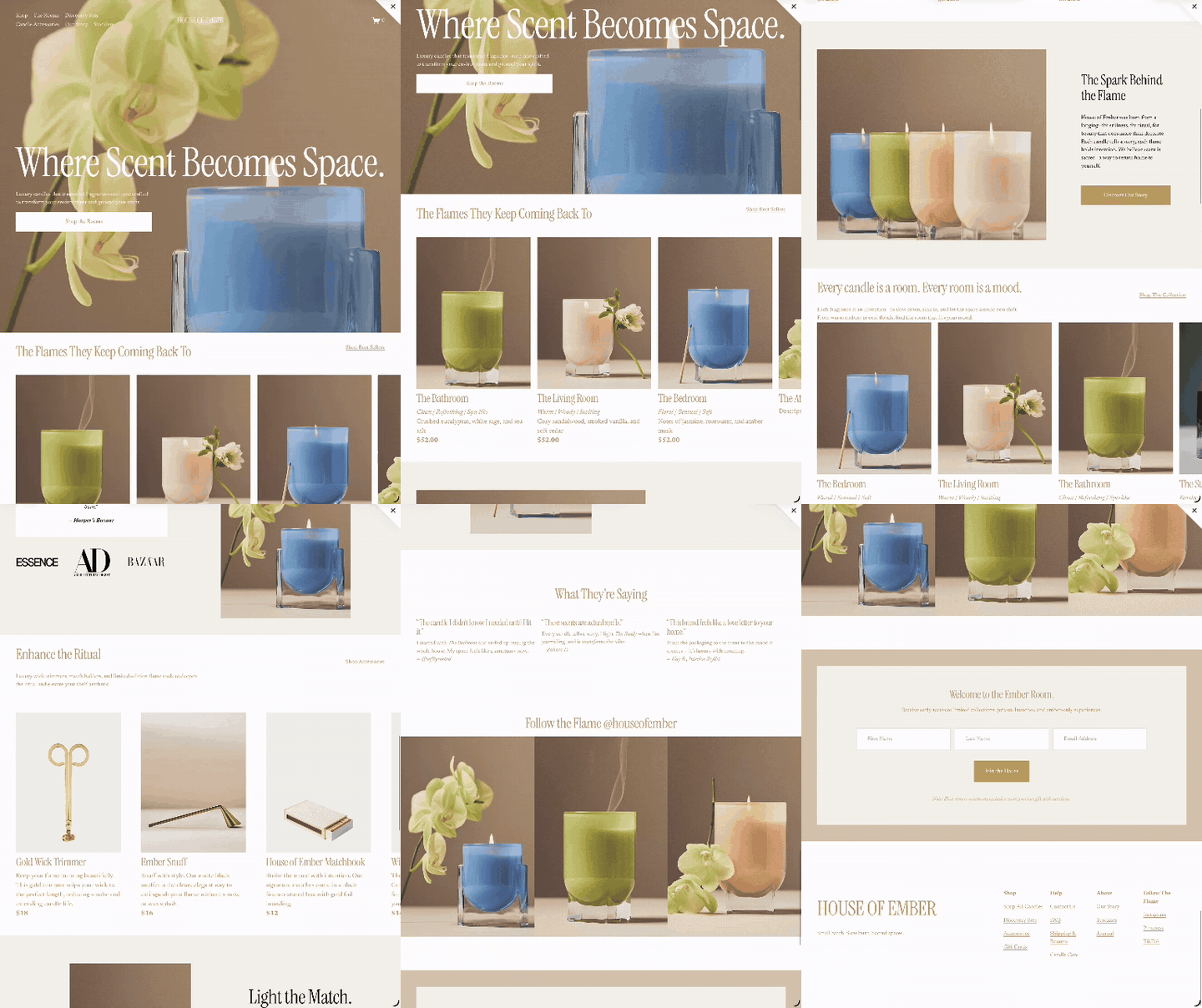
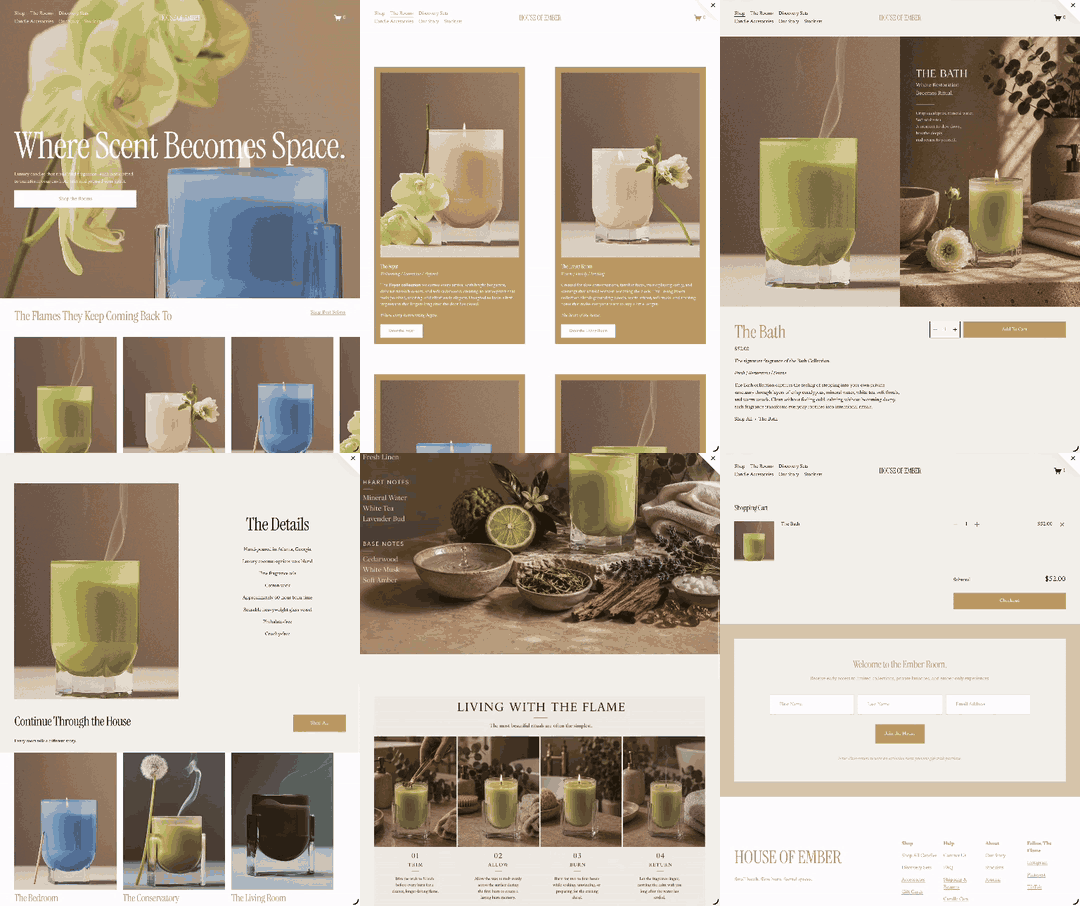
THE HOMEPAGE
The homepage introduced the brand through one idea:
Where Scent Becomes Space.
Rather than immediately overwhelming visitors with fragrance choices, the experience invited them into the world of House of Ember before guiding them toward the collection.
-
![]()
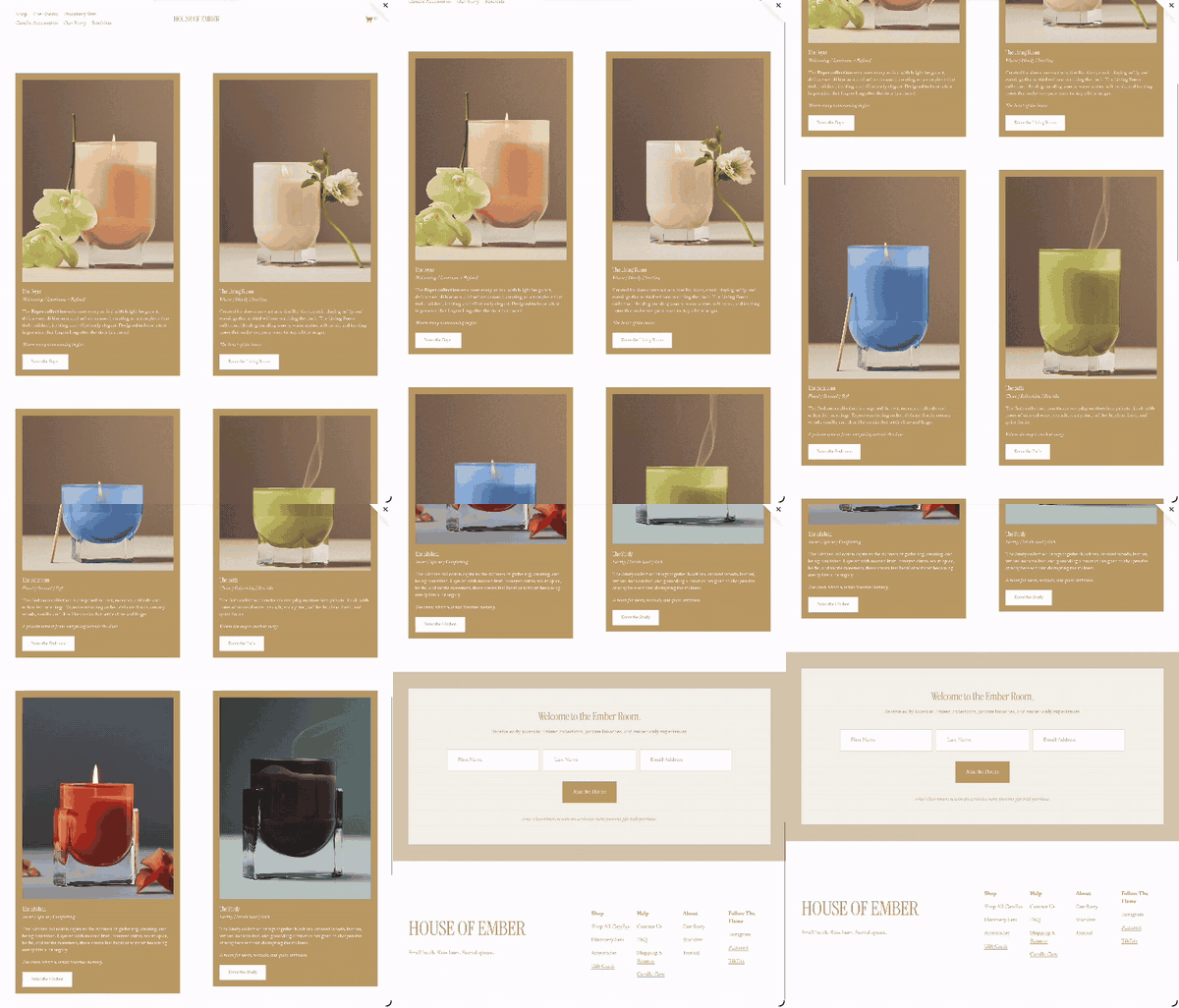
THE ROOMS
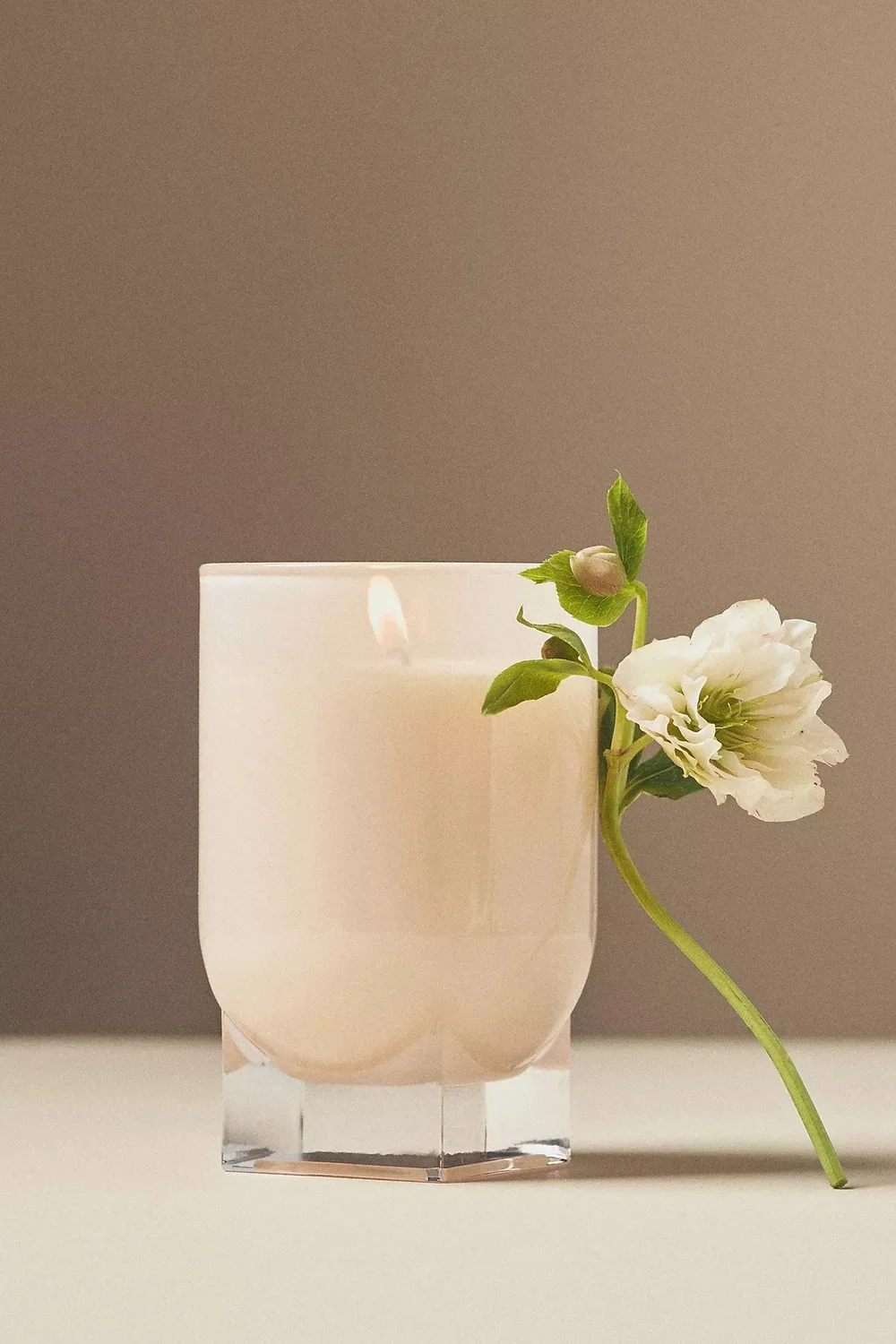
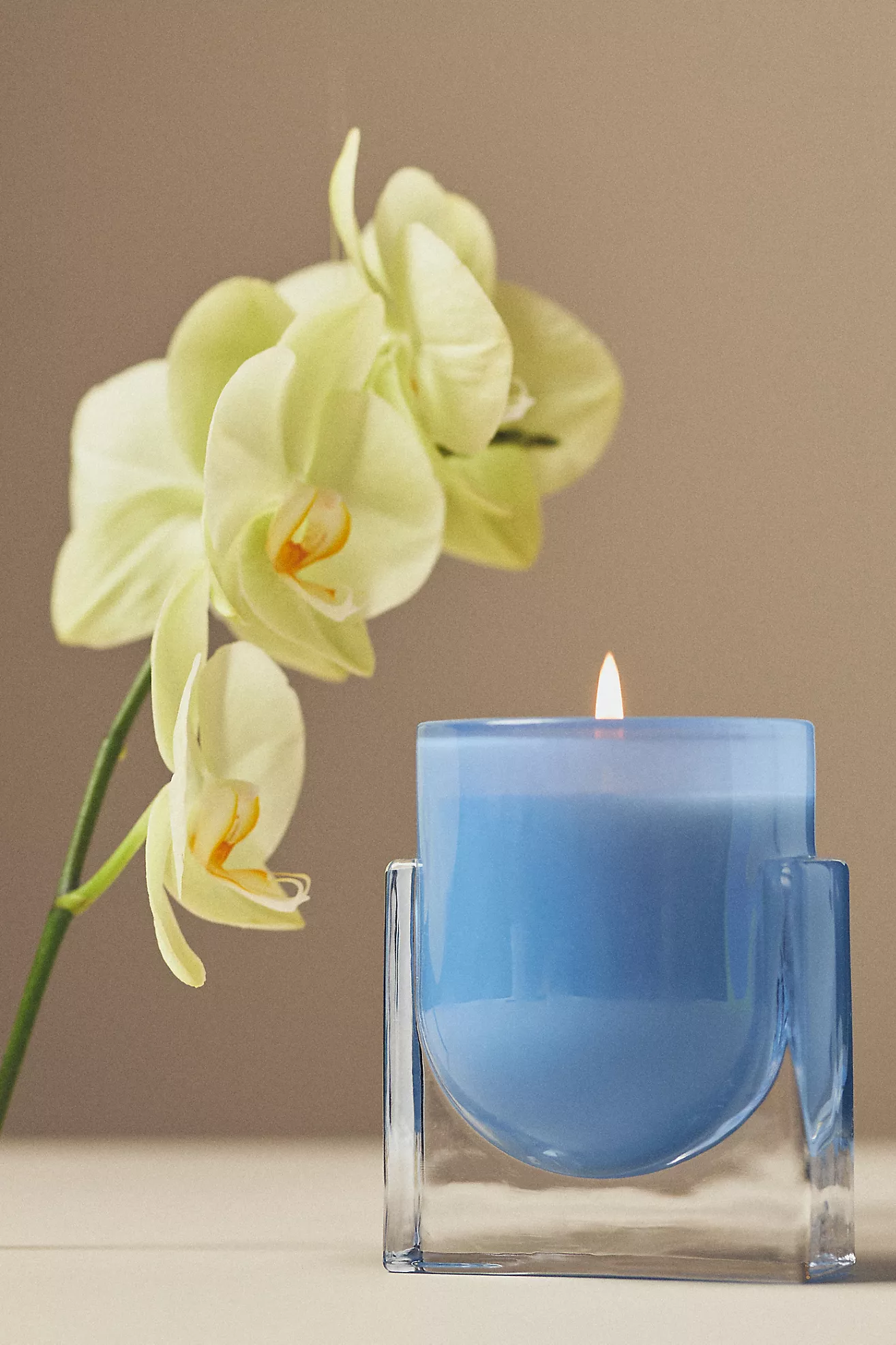
Each candle became a room.
The Foyer, Living Room, Kitchen, Bedroom, Bath, and Study gave customers a familiar way to explore fragrance through atmosphere, making product discovery feel more intuitive and personal.
-
![]()
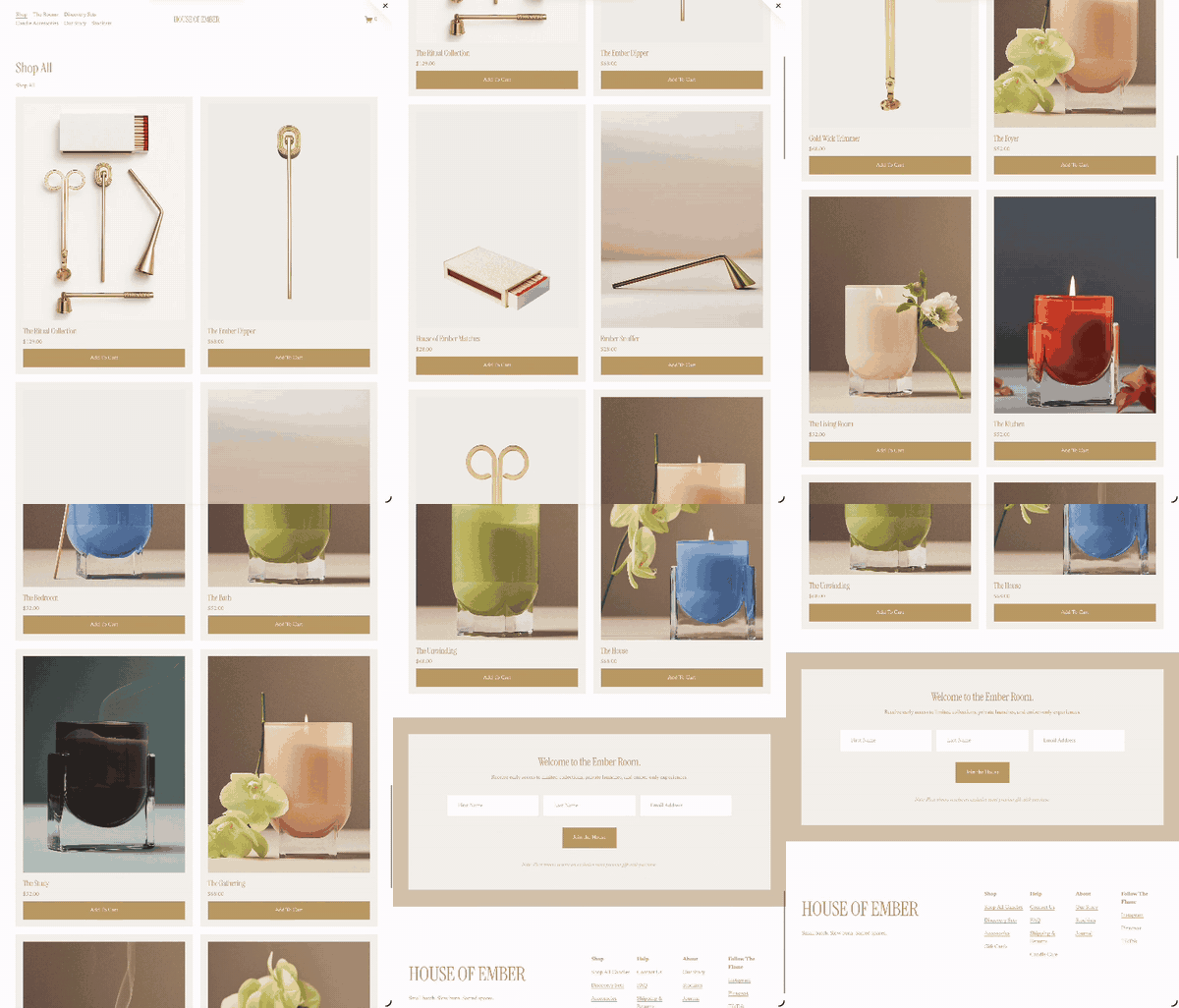
PRODUCT DISCOVERY
The shopping experience offered two ways forward.
Customers could explore the story behind each room or move directly into the catalog, keeping discovery immersive without making purchasing unnecessarily complicated.
-
![]()
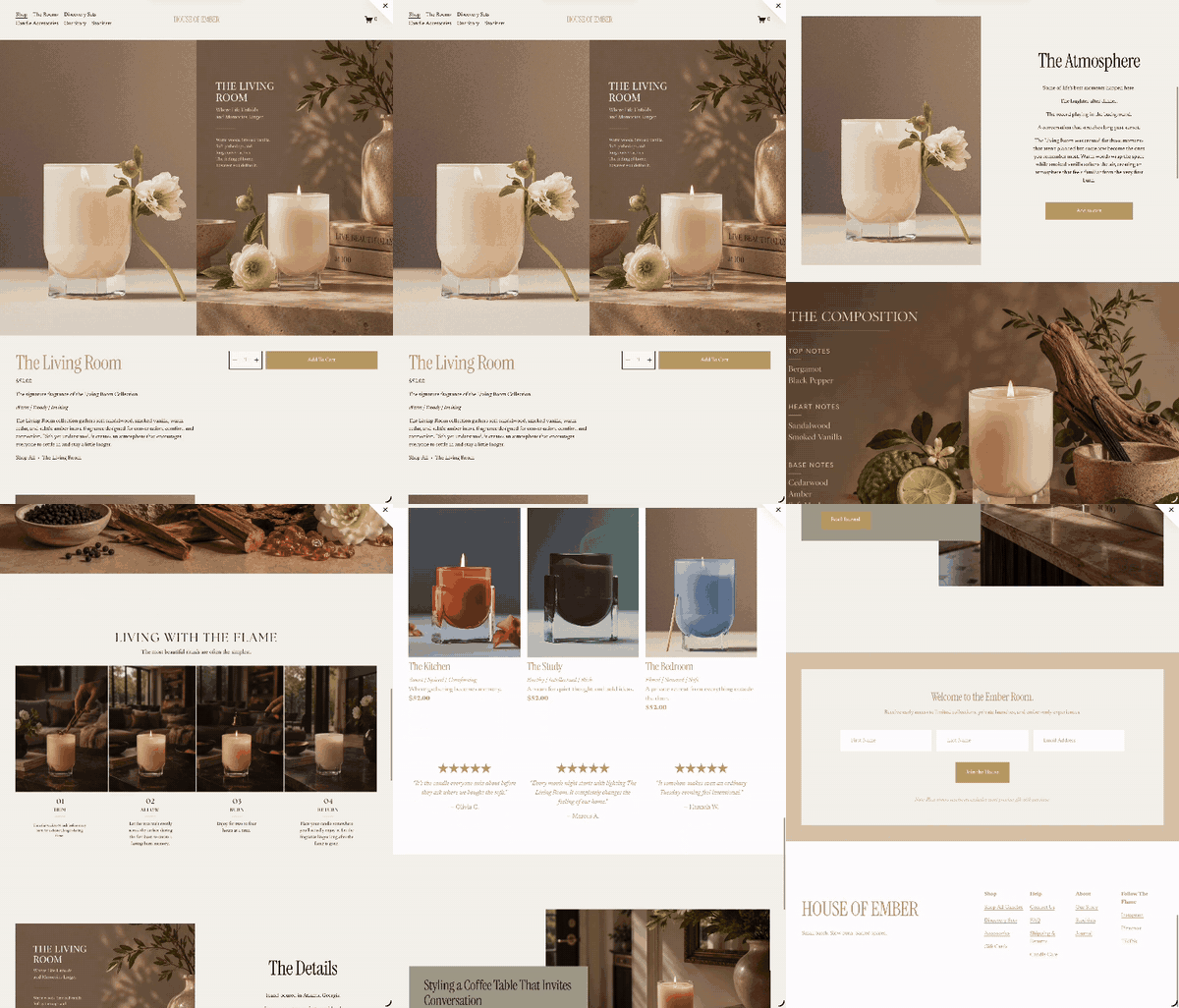
PRODUCT PAGES EXPERIENCE
The product pages brought each room to life before moving into the details.
Atmosphere-led imagery and storytelling created desire, while fragrance composition, practical information, and clear purchase controls helped customers choose confidently.
-
![]()
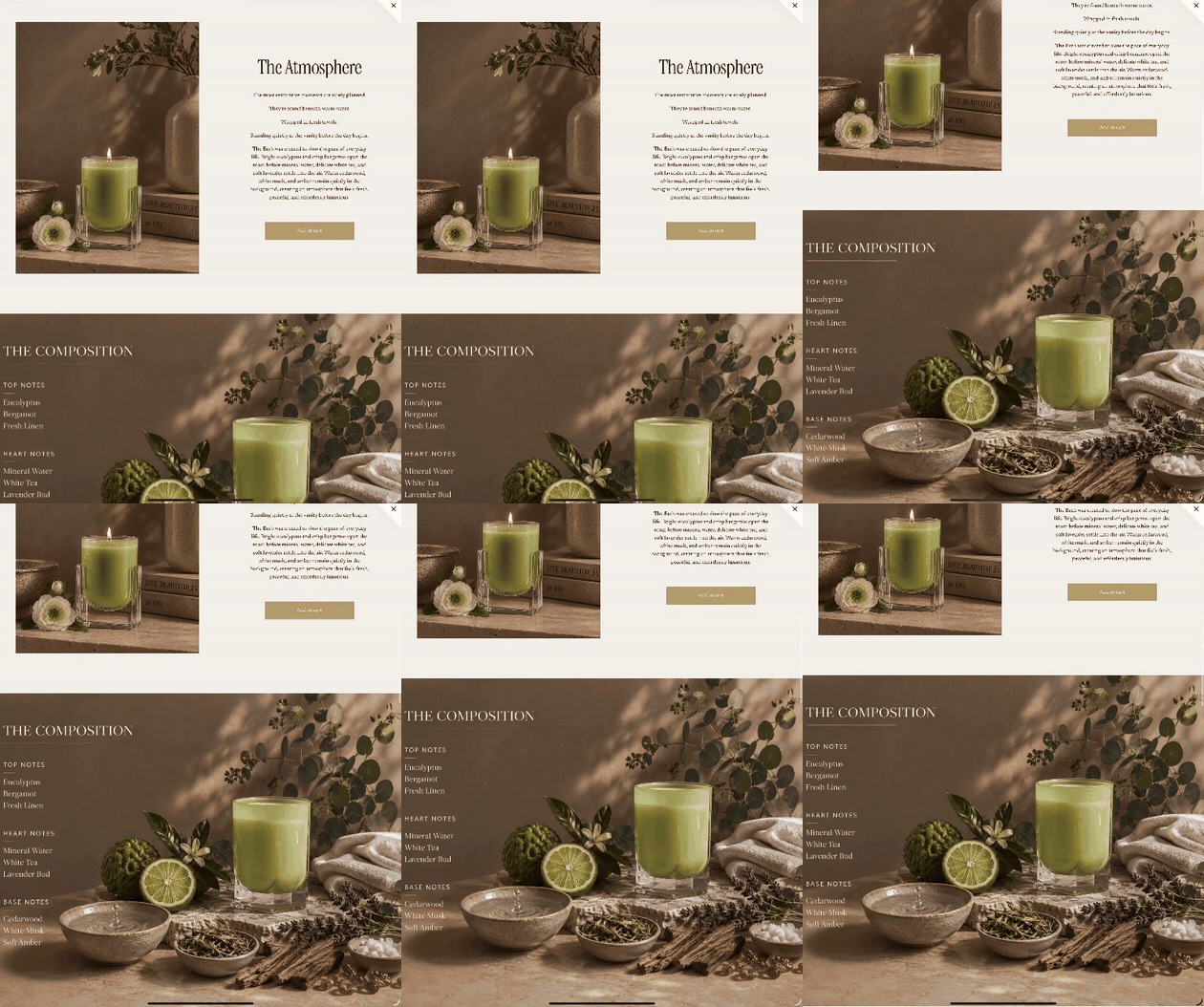
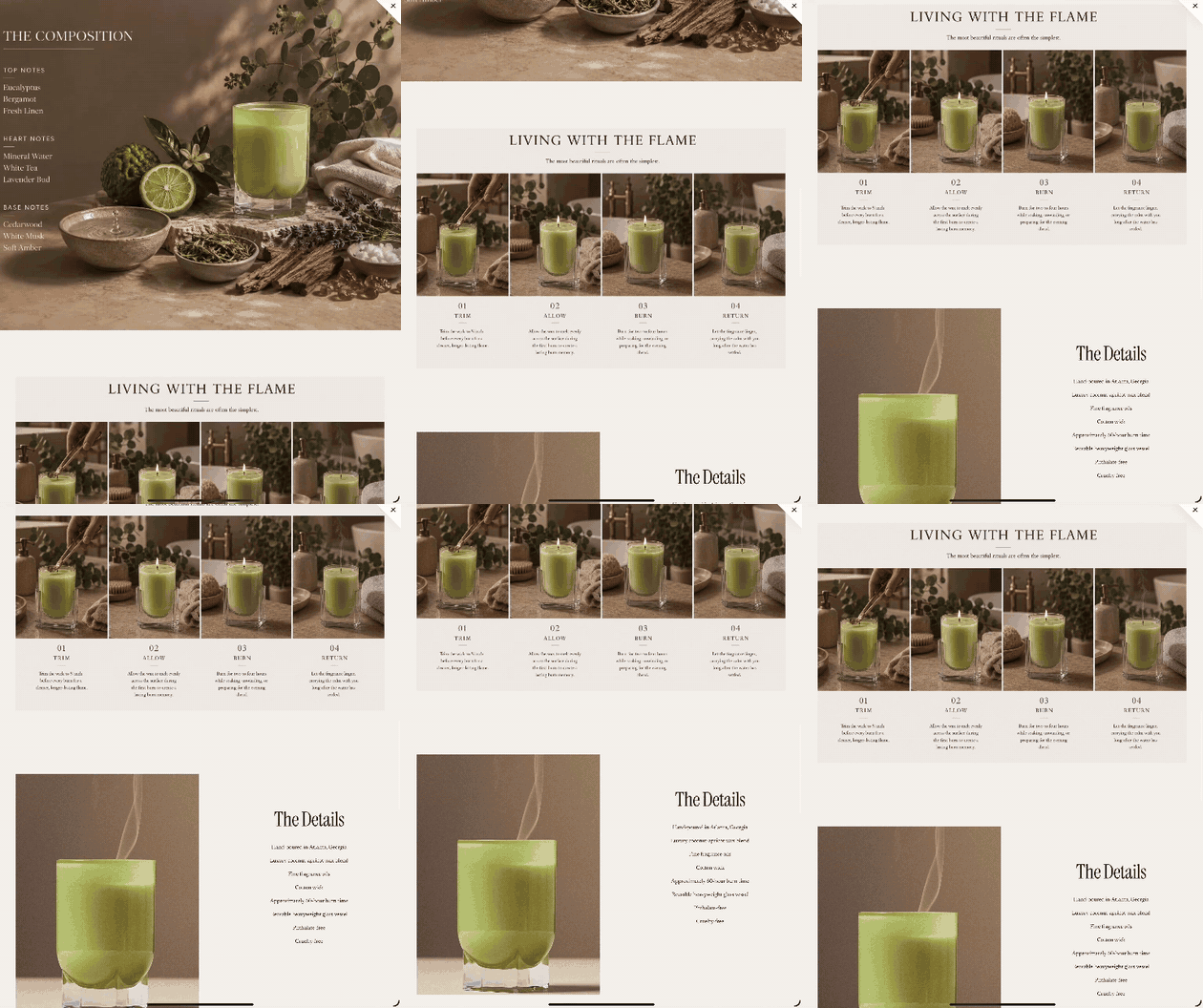
FRAGRANCE COMPOSITION
The experience never abandoned product clarity.
Fragrance notes and composition gave customers something tangible to evaluate, connecting the emotional atmosphere of each room to the actual scent they were purchasing.
-
![]()
LIVING WITH THE FLAME
We extended the story beyond the moment of purchase.
Living With the Flame introduced the candle as part of an everyday ritual, helping customers imagine how fragrance could become a recurring moment in their homes.
-
![]()
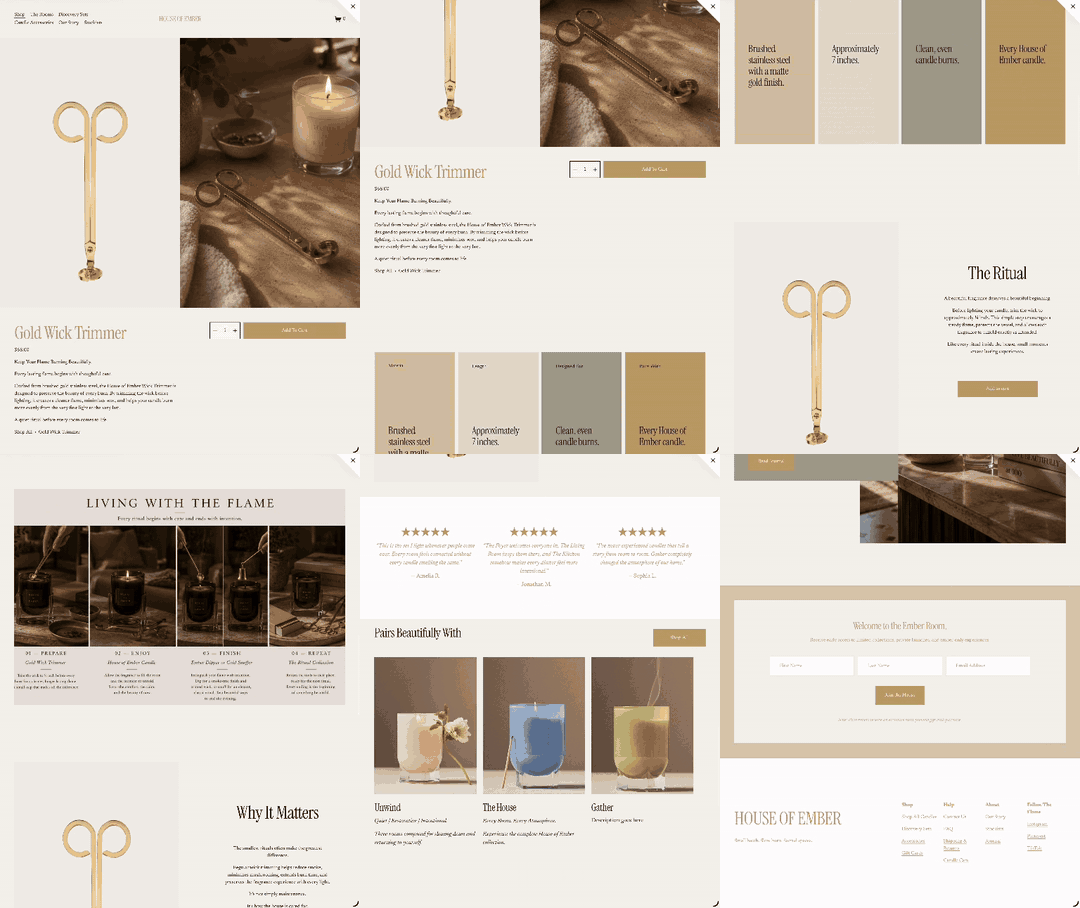
ACCESSORIES
The accessories weren’t treated like random add-ons.
Candle-care tools and supporting objects became natural extensions of the ritual, giving customers more ways to care for and experience their products.
-
![]()
THE HOUSE JOURNAL
The House Journal gave the brand a voice beyond its catalog.
Fragrance, interiors, rituals, and intentional living could become ongoing editorial conversations without relying on constant product promotions.
-
![]()
CUSTOMER JOURNEY
Every part of the experience was designed to connect.
A customer could discover the house, choose a room, explore its fragrance, purchase a candle, build a ritual around it, and return to discover another atmosphere.

LOOKING BACK
House of Ember reminded us that the most meaningful part of a product is not always the product itself.
The fragrance mattered.
The vessel mattered.
The craftsmanship mattered.
But the real opportunity was understanding where those things belonged in someone’s life.
The living room where everyone gathers.
The bedroom where the day finally slows down.
The foyer that welcomes someone home.
The bath that becomes a moment of quiet.
The study where thoughts become ideas.
The spaces were already there.
The moments were already happening.
We simply gave fragrance a place inside them.
Because a house doesn’t become a home just because someone fills it with beautiful things.
It becomes a home through the feeling those things help create.
And sometimes, all it takes is a flame.